


Is Your Website AI-Agent Ready? How to Test if Autonomous Bots Can Read Your Content


Is Your Website AI-Agent Ready? How to Test if Autonomous Bots Can Read Your Content was created by Trony
09 Nov 2026 17:53
11 Nov 2026 08:11
The search landscape is undergoing a massive shift.
Search engines are no longer just delivering blue links; AI search engines, answer engines, and autonomous web agents are actively crawling, parsing, and executing actions directly on web pages.
Search engines are no longer just delivering blue links; AI search engines, answer engines, and autonomous web agents are actively crawling, parsing, and executing actions directly on web pages.
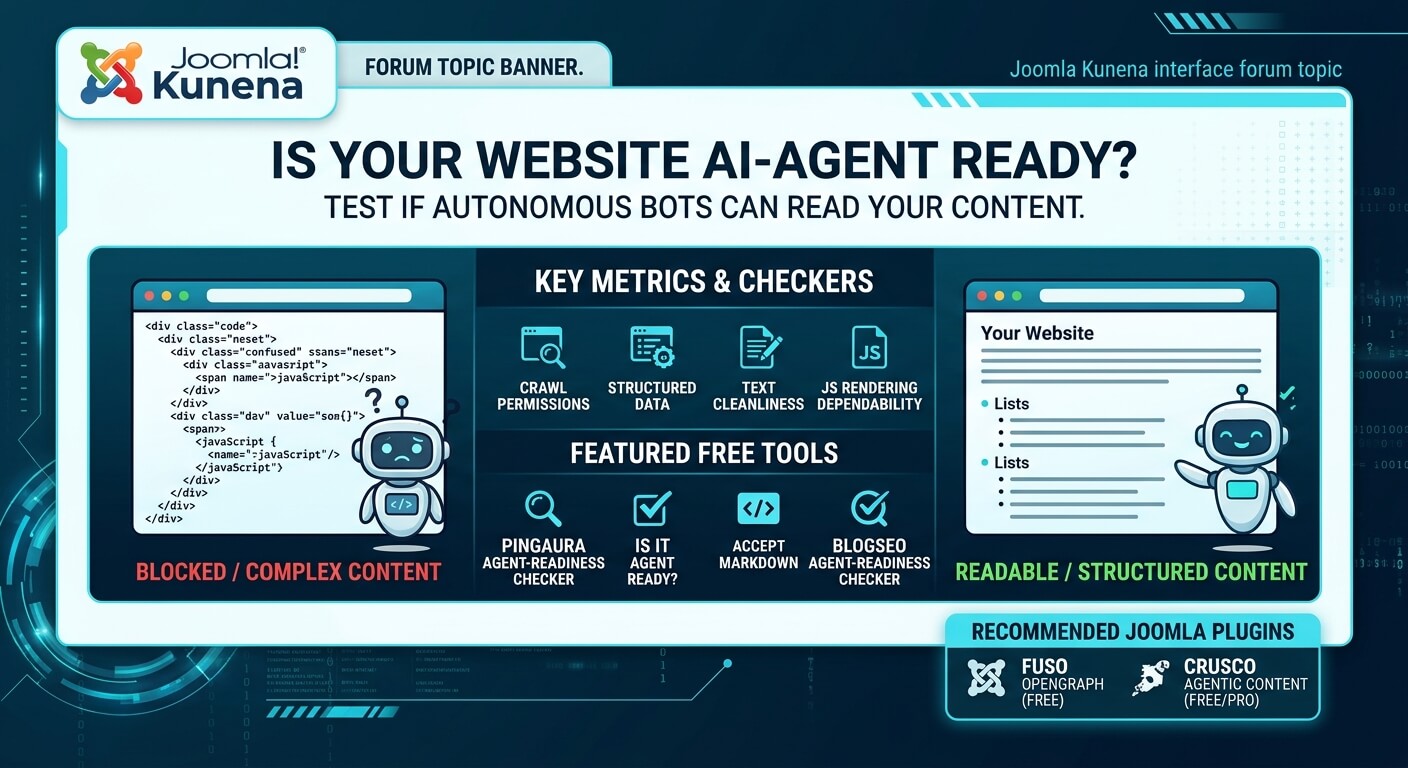
If your website isn't optimized for these autonomous systems, your content risks becoming invisible to the next generation of web consumers. Agentic SEO (or AI Agent Optimization) focuses on ensuring that LLM-driven agents can easily access, digest, and interpret your site.
To determine whether your site is accessible to AI crawlers, several specialized Agent-Readiness Checkers evaluate your technical infrastructure, content formatting, and bot permissions.
5 Free Tools to Test Your Website’s Agent-Readiness
Here is a breakdown of four specialized tools designed to analyze how well AI agents interact with your domain.
1. PingAura Agent-Readiness Checker
Best for: Technical diagnostic checks and bot visibility.
- Analyzes robots.txt configuration to confirm whether major AI bots (e.g., GPTBot, ClaudeBot, PerplexityBot) are blocked or allowed.
- Evaluates server response times, rendering performance, and clean DOM structures.
- Flags JavaScript rendering traps that might prevent headless LLM scrapers from seeing dynamic content.
2. Is It Agent Ready?
Best for: Quick, high-level readiness scoring.
- Provides an overall "Agent Readiness Score" based on technical crawlability and structured data presence.
- Checks for machine-readable protocols such as clear API endpoints, OpenAPI specs, or JSON-LD schema markup.
- Assesses whether your website relies heavily on interactive UI elements (like complex pop-ups or captcha walls) that block autonomous agents.
3. Accept Markdown
Best for: Content formatting and LLM readability testing.
- Evaluates whether your web server properly handles or serves content optimized for text-based parsing (such as clean Markdown format over bloated HTML/CSS).
- Measures how easily an LLM can extract core facts without losing context in heavy boilerplate layout markup.
- Highlights semantic structure compliance (proper heading hierarchies, semantic HTML5 tags).
4. BlogSEO Agent-Readiness Checker
Best for: SEO-focused content optimization for generative answers.
- Inspects your site’s structured data (Schema.org) to ensure entities, FAQs, and article details are explicitly declared.
- Measures content density and clarity, checking if your key information is easily summarizeable by LLMs.
- Gives actionable recommendations to help your content get cited in AI-generated search overviews.
5. Frase Agent-Readiness Checker
Best for: AI search visibility and content parseability testing.
- Scans web pages to verify if key informational assets are structured effectively for AI search engines.
- Checks text accessibility, structural formatting, and metadata clarity for LLM scrapers.
- Provides recommendations to improve content extraction efficiency and topic authority for AI engines.
Key Metrics Evaluated by Agent-Readiness Tools
| Metric Category | What It Measures | Why It Matters for AI Agents |
|---|---|---|
| Crawl Permissions | robots.txt & Meta Tags | Prevents user-agent blocking of main AI crawlers (GPTBot, ClaudeBot, Bytespider). |
| Text Cleanliness | HTML-to-Markdown ratio | Heavy visual layouts increase token costs and parser complexity for LLMs. |
| Structured Data | JSON-LD / Schema.org | Helps agents quickly extract core entity facts (pricing, FAQs, business details). |
| JS Rendering Dependability | Server-Side vs. Client-Side Rendering | Lightweight headless agents often fail to execute complex client-side JavaScript. |
Actionable Steps to Improve Your Agent-Readiness
- Audit your robots.txt file: Ensure you aren't unintentionally disallowing key AI user-agents if you want your content cited in AI answers.
- Implement Rich JSON-LD Schema: Clearly define entities, products, and articles so agents don't have to infer context from plain text.
- Optimize for Plain Text/Markdown Output: Keep core content cleanly structured using semantic HTML tags (<article>, <section>, <h1>-<h6>).
- Ensure Server-Side Rendering (SSR): Make sure vital information is present in the initial HTML response without relying on heavy JavaScript execution.
Recommended Joomla Plugins for AI Agent Optimization
If you run a Joomla website and want to quickly upgrade its infrastructure for AI agents and LLM crawlers, here are two specialized plugins to optimize your site:
1. FusoOpenGraph (Free Download)
Link: FusoOpenGraph System Plugin
2. Crusco Agentic Content (Free / Pro Download)
Link: Crusco Agentic Content Extension
If you run a Joomla website and want to quickly upgrade its infrastructure for AI agents and LLM crawlers, here are two specialized plugins to optimize your site:
1. FusoOpenGraph (Free Download)
Link: FusoOpenGraph System Plugin
- Specifically designed to generate and optimize rich JSON-LD structured data and Open Graph metadata automatically.
- Ensures AI engines get precise entity context directly in the document header.
2. Crusco Agentic Content (Free / Pro Download)
Link: Crusco Agentic Content Extension
- Purpose-built for Markdown conversion and serving clean `llm.txt` content for autonomous AI bots.
- Helps streamline text parsing and reduces LLM token overhead during page ingestion.
"Music and Electronic Devices Designer. Drum and Bass Addict. Creative Mind as Lifestyle. Cat in past Life. Football, Ice Hockey and Snowboard Lover. Marxist."
Sono Il Re sul Carro Danzante.
Attraversando La Città Getto Via I Coriandoli Della Vostra Tristezza Regalando Passione Ed Estasi Nei Vostri Occhi.
Sono Il Re sul Carro Danzante.
Attraversando La Città Getto Via I Coriandoli Della Vostra Tristezza Regalando Passione Ed Estasi Nei Vostri Occhi.
💡 Discover other Discussions...
-
14 Aug 2026, 17:28
-
15 Apr 2016, 16:51